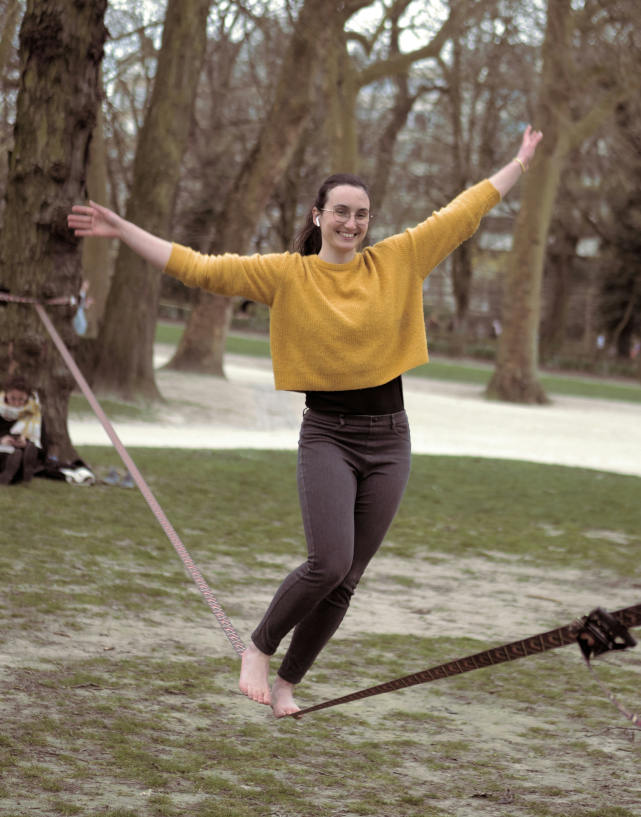
I feel that there is a huge amount of wisdom that comes to us from what are known as the internal martial arts such as Tai Chi and Yiquan. In their authentic form these arts great prowess comes from a form of complete ‘relaxation’ known as sung or song and a different kind of strength that arises from using the whole body and the whole mind in any action. ( Song / Sung does not translate easily into western languages where ‘relaxation’ often means a form of partial collapse ).
A phrase used in Tai Chi runs something like this “If one part moves then all parts move”.
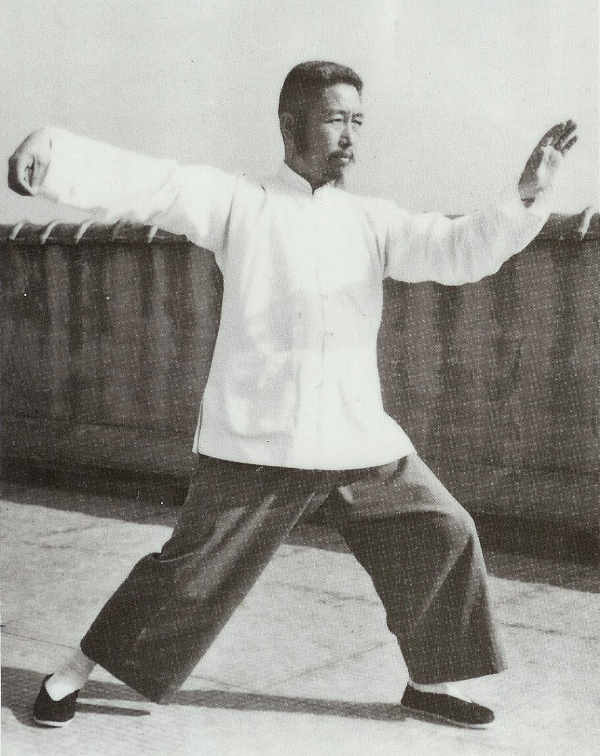
F.M. Alexander, the founder of the Alexander Technique talked of psycho-physical unity, by this he meant that it is really impossible to separate out our mental activity and our physical activity – this is why he talked of ‘use of the self’ rather than ‘use of the mind’ or ‘use of the body’.
Alexander’s terminology may seem dated, ‘use of the self’ sounds a bit odd doesn’t it but remember we often say things like “when I use my arm it hurts”, Alexander is using the same word but he refuses to be drawn into characterising our activities in terms of one part or another part, he says you use your entire body and your entire mind in every act you undertake. I am not sure he could have expressed it any better once we see it from Alexander’s viewpoint.
The Chinese were aware of this a long time before Alexander, often in the West we think we have discovered new things but the same things are often rediscovered in different places at different times.
Returning to the Tai Chi phrase “If one part moves then all parts move” it means that when we are fluid and free then we act with our whole body not just a part of it in isolation like for instance our arm.
I want to take this old Tai Chi wisdom and show how it is intimately related to our balance, whether we are allowing our natural balance system to do it’s job or whether we are unintentionally getting in its way.
Let’s look at an example, standing whilst looking up and reaching towards the ceiling to unscrew a light bulb that needs replacing…
Before we even consider the task of reaching upwards to get your hands on the light bulb lets consider the miracle that you are already undertaking – you are standing on two feet and balancing, we take it for granted but very few other animals are bipedal and none match our dexterity on two legs.
You are never actually “balanced” instead you are constantly going off balance and your amazing system is performing countless micro adjustments nudging you back towards balance every second and so keeping you upright…
Or at least that is what is supposed to happen but unfortunately human beings have learnt the unsubtle art of bracing, we end up holding our lower parts (legs hips feet etc) fixed whilst expecting our upper regions to remain flexible so we can reach up to unscrew the light bulb, my description for this is that “we have let the task split us”. Instead of functioning as one fluid, dynamic whole that is continuously re-balancing we have instead closed down the fluidity in our lower ‘base’ to give ourselves what feels like a fixed, stable base upon which to perform the flexible actions with our arms, neck and head. You might say that our lower half is in some kind of “balance” but only in the same rigid way as a stone statue is in “balance”, a stone statue does not topple over as long as the weight stays above the base of the statue but it’s hardly a fluid way to stand.
Ok! So Sometimes We Stand Like A Stone Statue, What’s Wrong With That?
We don’t have the same design as a stone statue!
Our bodies are not designed to have one part inflexible and tense and another be flexible. From head to toe our insides have lots of fascial sheets that connect our muscular systems, the old ideas of single isolated muscles moving individual bones like levers is fast proving inaccurate, muscles can pull on fascial sheets that connect to other muscles so that changes in one part of us ripple through to all the other parts, the idea of successfully isolating one part of your movement system in a frozen state whilst another part of you remains fully flexible is not ideal, it causes strain and physical tension and often mental tension as well.
When we brace our legs, knees, ankles and hips so that we can look upwards and reach for an over head lightbulb it is as if we are driving a car with our foot on the brake and the accelerator at the same time; we are asking our body to perform conflicting tasks.
Adults can relearn what young children take for granted and stay balanced and fluid from soles of feet to tip of outstretched fingers whilst performing a task, but we must remember that the task is something that is being done ‘ontop’ of the primary act of balancing, and so it needs to become part of the act of balancing, it needs to blend in harmoniously with the activity of balancing.
So here is the punch-line, any act we perform is really an extension of the act of balancing and since balancing is a whole self activity then anything else we do is ideally a whole self activity as well, then we can respect the primary needs of balancing by remaining fluidic throughout.
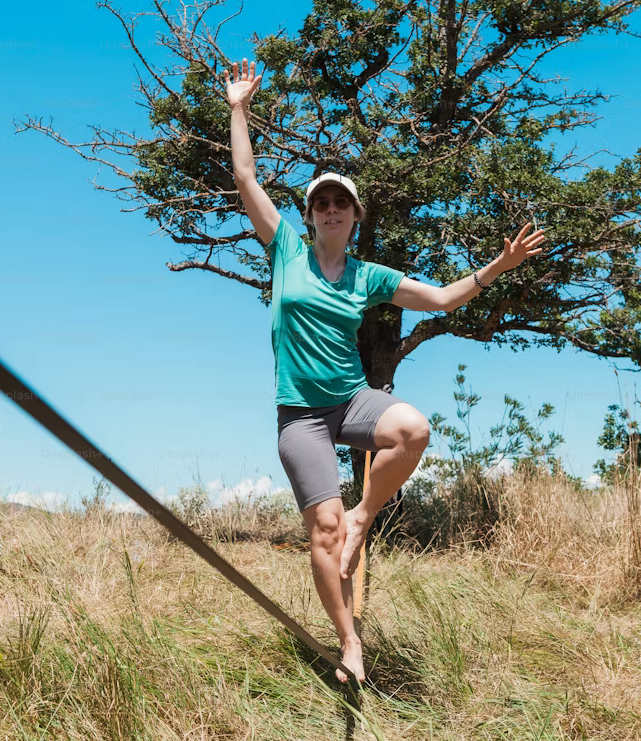
If the skilled balance artist shown above chose to perform the same ‘pose’ standing on the ground they would still have to perform the act of balancing, it would be less demanding but the principles would not change, I am exaggerating the situation so we can clearly see that the primary act that occurs before and during any other thing we do, like waving our arms in the air, is one of balance. Clearly this person would fall off if they stiffened their lower body, instead their body is acting as one fluidic, unified and therefore balanced, whole. Although most of us will not achieve the level of balance displayed above we may still be able to apply the general principles in every day life.
The advice that comes out of this is that if you decide to do something then choose to include every single part of yourself even if some parts seem to play a minor role, just your awareness is enough to start to bring it all alive. If you are cutting a potato on the worktop then take an interest in the subtle ripples of adjustment that the movement of your hand and arm might produce in your ankles or your hips, don’t force a reaction, instead invite and allow ripples to spread throughout your system, we could say that you bring the activity of cutting a potato into your balance system.
If the last paragraph sounded unbelievable please watch the following balance artist and after watching ask yourself if a person can integrate an ‘external task’ into their balance system so that they become an integrated whole, this balance artist is “at one” with the feather and palm sticks, sounds “woo woo”? See what you think after watching?
If we are not in balance in ourselves and not in balance with the things we pick up and hold then we are straining and stiffening and after a while it becomes habitual, we can no longer sense quite what we are doing with ourselves and we end up needing help to find our way back to fluid balance.
How Can I Learn to Balance Well?
We can decide that we want to perform a particular balancing act, for instance we may simply decide to step onto a log and balance on that. However, although we can decide to perform a balancing act, the actual mechanisms of balance are not usually directly accessible to our conscious minds, in other words the amazing feat of biological ‘computation’ involved in balance comes from deeper mechanisms which do the balancing for us but what we can do is identify things that get in the way, we give our balance system a better chance!
A few preliminary things are…
- Soften your eyes! Don’t use your eyes in a tight hard focused fashion, include more of your peripheral vision – your eyes are an important part of balance, look straight ahead with soft eyes but at the same time as if taking in a wide view of the horizon, perhaps standing on a beach looking out to sea.
- Don’t go completely internal in an attempt to concentrate, instead stay aware of your surroundings because your balance system needs a constant stream of information about where you are and your orientation in space, vision is very important but so are receptors in the soles of your feet, so remove tightly fitting shoes where practical.
- As much as possible allow your neck, shoulders, arms and hands to be free and to soften and the same for your legs your limbs need to serve your balance system but not restrict or interfere by stiffening.
After those preliminaries (there are others that could be added) try this experiment.
Just standing normally decide to believe something as follows…if you like it’s an act of faith.
I want to suggest to you that merely moving your outstretched hand a small amount will cause a cascade, a ripple of automatic little micro-adjustments that travel up and down your entire body, all the way from the soles of feet to your fingertips and the top of your head, just so long as you let them pass through everywhere having an attitude that you want to stay physically and mentally open and receptive. These ripples of adjustment signify your balance system at work as it adjusts for the hand movement, and it needs ‘access all areas‘ which means not bracing. Look again at the picture above if you are not convinced – it’s just a matter of the degree of balancing challenge. What applies on the slack line or high-wire also applies equally to people standing on the ground, the only difference is that it is possible to remain upright by bracing when standing whereas people on slack lines who brace fall off.
I like to think that at least in principle a movement of my little finger will cause a tiny re-balancing ripple to reach as far as my big toe, it may be an exaggeration on my part but I find it a useful picture to work with, it reminds me to be open everywhere so that the smallest adjustments can ripple easily through my whole body.
This is not really about whether you can feel these adjustments but more that you adopt an attitude and a belief that ripples of adjustment are occurring and you have decided to give these tiny adjustments ‘free passage‘ to go anywhere and everywhere they need to flow, to stay open and receptive to this constant river or flow of little adjustments rippling through your system. Our conscious minds do not have the capacity to micromanage these adjustments but we can learn over time to be open to them. Unfortunately we also have the ability to block and shut down these ripples of adjustment by stiffening our joints, it’s a bit like hoses that can develop blockages that impede the passage of water.
That’s really the main secret to balance, if we get out of the way and stop blocking it then it does itself and does a better job than our conscious minds could ever hope to achieve, we just need to find a way to be open in order to let everything pass through where ever it needs to go. Perhaps think of yourself as a manager of a motorway network, your attention does not zoom into individual cars and lorries and you don’t know the final destination for each vehicle, instead you have a sense of the flow of the traffic, all is well when the traffic flows unhindered by blockages.
Of course it’s necessary to slowly build on this exercise, we cannot change a lifetime’s worth of balancing like a statue overnight but if you believe that these ripples of adjustment are there and trying to get through and you decide that you want to be open to them and give them free passage you may find in time greater ‘balancing fluidity’ arising in yourself.
I will finish with another quote from Tai Chi masters of old
“A fly could not alight”
Meaning that a fly could not land on a Tai Chi master without his/her system responding, their balance system would feel the difference, of course there may be a bit of exaggeration here but it shows the direction.