
The way you use your eyes can have a significant effect on your ease of movement or sitting, indeed your entire well being.
temporary notice: If you are returning to this post please note it has recently been split up, part1, part2 etc
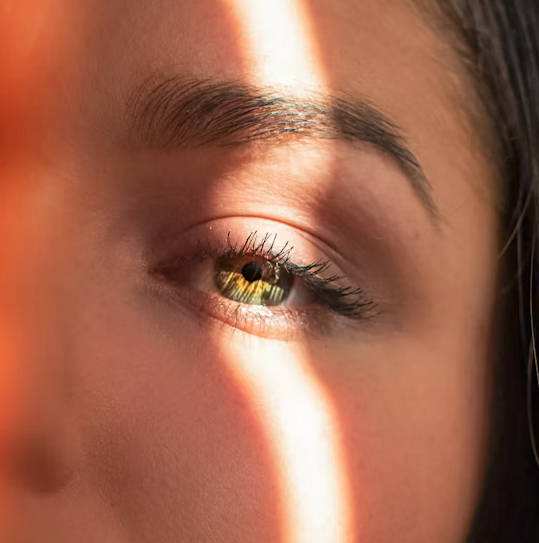
When someone arrives for a lesson you could say metaphorically they don’t arrive in one go, they may have all kinds of things whizzing around in their head, it takes time for their system to fully adjust, decompress and so to really arrive and actually be in the room. They start to untangle themselves from the things that ten or twenty minutes ago were occupying their minds.
So when I am with a client who has just stood in front of the chair I ask them to pause, they already know that they are going to sit down in a moment, but instead of just cracking on I want them to pause and feel the ground beneath their stocking feet, to start to try and tune into the continual trickle of small, automatic adjustments that occur from their head to their toes as they balance on their feet, this is part of the process of encouraging them to be really present in the moment and in the room. It’s a pause, just creating a little time and space before we go into movement.
Whilst I am inviting my client to pause and really arrive in the room I ask them to take an interest in their peripheral vision, I like to call it ambient vision, they don’t move their head or eyes to do this, it doesn’t matter that things to the sides are less distinct, it’s a matter of tuning in, as we become more aware of what is going on in our periphery vision it stimulates our balance system and wakes it up.
This is one of the reasons people slump in front of their computer screens, they have ceased using their ambient or peripheral vision, and so the balance system has gone offline, the part of the ‘image’ they are interested in is only the central part, the visual component of balance is lacking stimulation. In some ways this is an advantage if your are a computer programmer because it is precisely this kind of narrow vision that stimulates the focused, logical areas of our brain.
There is a close correspondence between the narrowness of our field of vision and the narrowness or focus of the processes of the mind so when we narrow our focus both visually and mentally our balance and posture systems start to go offline.
To put it in more positive way ‘wide eyes’ invites us into a state of ‘wide mind’ and better balance with less tendency to slump. If this sounds strange then compare an ancestral hunter gatherer from a few hundreds of thousands of years ago with a modern computer programmer, which of these two individuals do you think depends on a wide awareness of their surroundings and may need to move quickly or stealthily at a moments notice? The way you are using your eyes telegraphs intention to your balance and movement systems.
We are predisposed to linear problem solving when our vision is tightly focused, this kind of mental and visual concentration is fine for a while but it makes it more difficult for our balance system because so much of balance is about visual orientation in our environment, our balance system craves wide vision, the big difference here is in brain patterns. Focused vision is fine for tasks that are sequential, your brain processes one thing at a time and you progress along a chain of tasks until you reach the end. Peripheral or ambient vision is better for processing a number of things at the same time but is much less focused and interested in detail.
The key thing to understand is that vision and mind co-ordinate. If your mind is tightly focused on one thing then even if you aren’t looking at anything in particular your eyes will tend to harden and tense as if you were actually looking at a small area of interest with great intensity, if on the other hand you are in a creative wide open state of mind then your eyes will tend to soften and open up as if you were appreciating a wide scene.
Little wonder then, after an hour trying to solve a knotty problem on a screen a computer user will often start slumping, that’s a sign that the balance system has given up and the muscles are tired from bracing. The slump is the bodies last ditch attempt for keeping us upright in the chair, we become like potatoes settling in the sack immediately after it is put down on the ground which is not great for our internal organs.
So there is an intimate connection between the tone of our mind and the tone of our vision, when we see through a narrow corridor of visual awareness we see one thing at a time, our vision moves sequentially to different objects in the scene, it’s linear and encourages the mind into a similar state of processing one thing at a time, great if you have to add up some numbers but no so useful if you want to engage your balance system. When we soften our view, going into a wider visual awareness we improve at seeing the bigger picture, our brain and vision move from a “one at a time” to an “all at the same time” style of processing, we process the entire scene, just as long as we don’t get drawn into thought patterns that pull our mind and vision back into “one at a time“. The trick is to learn to soften and gently widen visual awareness and to start to enjoy the experience as the mind also goes wide starts to care less about specifics and instead starts to simply be in the present moment, its not drifting but rather effortless non-specific awareness, we could call this ambient awareness.
So the eyes and the mind are intimately linked and so it’s a two way street! If we can persuade our minds to spread and soften and so become less tightly focused on one troubling detail then the eyes will also soften and our vision will decompress and we will start noticing our surroundings. On the other hand if we first soften our eyes then our concentration and focus on life’s problems softens.
We often need a break from troubling thoughts, when they loop endlessly we are not progressing with solving the problem. People report a very different kind of experience when they climb up a mountain and take in a majestic scene, the sheer scale makes them feel very small in a way that is strangely comforting, and of course great vistas of mountains encourage us into a wider less focused style of vision, it’s not a coincidence that we focus less on our problems in these places, they help disrupt unhelpful and repetitive patterns starting with the eyes.
If you are in any doubt about eyes and balance just recall the last time you visited a fairground crooked house and felt disorientated or wondered whether your train has just started moving out of the station or whether the train on the tracks next door has just started moving.
Our balance system is frequently starved of the kind of sensory information it needs, what it craves is to know where it is, what direction ‘up’ is, the first step to balance is sensory (eyes, soles of feet and inner ear ) and in turn balance is the foundation of all upright or seated movement or posture.
If we are not in a state of fluidic, adaptive balance and yet still managing to stay upright or seated in an upright position then it is because we have been forced to use the strategy that statues use – basically rigidity or bracing the parts that are supporting us.
But of course we don’t expect to stand around like statues, we expect to be able to move around and so we end up asking our bodies to do two incompatible things, to be loose enough to move freely and to be braced enough to cope with gravity in a non-balanced way. We are never truly in balance, we are always approaching balance but for this to work properly we need to dissolve the tensions and fixations that stop us getting closer to a fluid balance. Our aim is just to allow the micro adjustments that then occur naturally to keep nudging us towards balance and this activity keeps the system alive and supple. Nurturing our balance system is mostly about getting out of the way of nature and learning the skills of dissolving unhelpful tensions and of course softening our eyes and spreading our awareness over a wider field of vision.